 Skip to content


Foxtail Millet (Thinai): Benefits, How to Cook It, and Why It Beats White Rice
Foxtail millet — Thinai in Tamil, Korralu in Telugu, Navane in Kannada, Kangni in Hindi — is one of the oldest cultivated grains in the world. It fed South Indian families for over 2,000 years before polished white rice pushed it off our plates. Today it’s making a well-deserved comeback, and for good reason.
What is Foxtail Millet?
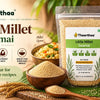
Foxtail millet is a small, yellow grain from the millet family — named after its seed head, which resembles a fox’s tail. It grows in dry conditions with minimal water, making it one of the most sustainable grains you can eat. In Tamil literature, Thinai appears in Sangam-era poetry — it was the grain of the hills, offered to Lord Murugan mixed with honey. Shop Foxtail Millet (Thinai) at Theerthaa.
Foxtail Millet vs White Rice: The Honest Comparison
Per 100g, foxtail millet gives you roughly 12g of protein compared to white rice’s 2.7g — more than four times as much. It has around 8g of fibre; white rice has under 1g. The glycemic index tells the biggest story: foxtail millet sits in the low-to-medium range (around 50–60), while polished white rice ranges 70–90. In practical terms, Thinai digests slowly, keeps you full longer, and avoids the sharp blood sugar spike-and-crash cycle that white rice creates.
Where white rice wins: it cooks faster, tastes neutral, and is cheaper. That’s the honest trade — convenience versus nutrition.
Key Benefits of Foxtail Millet
1. Steady energy and blood sugar
The high fibre and low glycemic index mean glucose releases slowly into your bloodstream. This is why Thinai is a popular staple choice for people managing blood sugar — as part of an overall balanced diet. Consult your doctor for personalised dietary advice.
2. Naturally gluten-free
Like all millets, Thinai contains no gluten. It’s a proper grain alternative for people with celiac disease or gluten sensitivity — not a processed substitute.
3. Protein and minerals
12g protein per 100g, plus iron, magnesium, phosphorus, and B vitamins. Traditional diets paired Thinai with lentils from our dal & pulses range, which completes the amino acid profile.
4. Keeps you full
The fibre content means smaller portions satisfy longer — one reason millet-based meals support healthy weight management without deliberate portion control.
Shop Foxtail Millet (Thinai) →
How to Cook Foxtail Millet (Exact Ratios)
Basic Thinai rice:
- Rinse 1 cup foxtail millet 2–3 times
- Soak for 15–30 minutes (improves texture and digestibility)
- Cook with 2 to 2.5 cups water — 2 cups for firm, separate grains (pulao-style), 2.5 for softer rice-like texture
- Pressure cook 2–3 whistles, or simmer covered 15–20 minutes
- Rest 5 minutes before fluffing
Ways to use it: replace rice in sambar/rasam meals, make Thinai pongal, upma, lemon millet, curd millet, or payasam sweetened with karupatti (palm jaggery). It takes any recipe white rice can — with a mild nutty flavour.
Who Should Eat It (And Who Should Go Slow)
Thinai suits almost everyone: people managing blood sugar looking for a rice alternative, anyone doing weight management, children (as porridge), and elders (easy to digest when soaked and cooked soft). Going slow is wise if you’re new to high-fibre grains — start with 2–3 meals a week and increase gradually, drinking enough water. People with thyroid conditions who eat millets as their primary staple every single day should moderate intake and consult their doctor.
Storage
Store in an airtight container in a cool, dry place. Whole foxtail millet keeps 6+ months. In humid coastal climates, refrigerating extends freshness.
Related Reading
Explore our related guides: The Complete Guide to Indian Millets and Which Millet Should You Start With?
The Bottom Line
Foxtail millet isn’t a trend — it’s a return. Your great-grandparents ate Thinai because it grew where rice couldn’t and kept them working all day. The nutrition science now confirms what tradition knew: four times the protein, eight times the fibre, and none of the blood sugar rollercoaster of polished rice. Start with three meals a week. Your body will tell you the rest.
Shop Theerthaa Millets
The information in this article is for educational purposes only and is not a substitute for professional medical advice. Consult your doctor before making dietary changes.
- Posted in:
- diabetic-friendly
- foxtail-millet
- gluten-free
- millets
- thinai
- traditional-grains
- weight-loss






:%20Benefits,%20How%20to%20Cook%20It,%20and%20Why%20It%20Beats%20White%20Rice)