 Skip to content


Badam Pisin (Almond Gum): What It Is, How to Soak It and Traditional Recipes
Badam Pisin is a hard, amber-coloured edible gum that swells into a soft, clear jelly when soaked overnight. In Tamil Nadu it goes into rose milk, nannari sherbet and jigarthanda through the hot months, and a teaspoon of dry crystals is enough for a full glass.
What is Badam Pisin?
In English, Badam Pisin is called almond gum. It's a natural resin that oozes from the bark of the almond tree (Prunus dulcis) and hardens into irregular translucent crystals. Those crystals are then collected, cleaned and dried. Unsoaked, they're rock-hard and inedible. Once they soak up water, they turn into a mild, nearly flavourless jelly that takes on the taste of whatever you mix it into.
| Language | Name |
|---|---|
| English | Almond Gum |
| Tamil | பாதாம் பிசின் (Badam Pisin) |
| Telugu | బాదం జిగురు (Badam Jiguru) |
| Malayalam | ബദാം പശ (Badam Pasha) |
| Kannada | ಬಾದಾಮಿ ಗೋಂದು (Badaami Gondu) |
| Hindi | बादाम गोंद (Badam Gond) |
What Badam Pisin Is Made Of
Almond gum is mostly made of polysaccharides, long chains of plant sugars that bind water. That's what lets one small crystal swell to many times its dry size. Badam Pisin has no fat and almost no protein, so it's there for texture rather than nutrition. Think of it the way you'd think of sago or agar: an ingredient that changes how a drink or dessert feels in the mouth.
Why It's Called a "Cooling" Ingredient
In South Indian and North Indian home cooking, Badam Pisin is traditionally grouped with "cooling" summer foods (kulirchi in Tamil), and that's why it turns up in chilled drinks from April to June. This is a cultural classification that grew out of seasonal cooking habits, not a measured effect. In practice, it's simply served cold, in sweet, milky or fruit-based drinks.
Badam Pisin vs Sabja Seeds vs Chia Seeds
All three swell in liquid and end up in the same summer glasses, but the texture is different. Badam Pisin gives soft, clear jelly pieces. Sabja seeds form a grey gel coat around a small crunchy black centre within about 15 minutes. Chia seeds take longer and thicken the whole liquid into a pudding-like consistency. For a side-by-side look at the two seeds, read our guide on sabja seeds vs chia seeds.
| Feature | Badam Pisin | Sabja Seeds | Chia Seeds |
|---|---|---|---|
| Source | Tree gum | Sweet basil seed | Salvia hispanica seed |
| Soaking time | 8–10 hours | 10–15 minutes | 20–30 minutes |
| Texture | Clear, soft jelly | Gel with crunchy centre | Thick, pudding-like |
| Typical use | Rose milk, jigarthanda, falooda | Sherbets, falooda, lemonade | Puddings, smoothies, oats |
How Badam Pisin Is Used in Indian Kitchens
Summer drinks
Rose milk, nannari sherbet, tender coconut water and lemon juice are the classic carriers. One or two tablespoons of soaked jelly per glass is the usual amount.
Jigarthanda
Madurai's signature drink layers reduced milk, nannari syrup, Badam Pisin jelly and ice cream. The jelly is what gives the drink its name and its slippery texture.
Desserts
Soaked Badam Pisin goes into falooda, payasam served chilled, fruit custard and fruit salad. In North India, the dry gum (gond) is also fried in ghee for winter laddoos. That's a different technique from soaking.
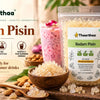
Making rose milk or jigarthanda at home? Our Badam Pisin comes in cleaned crystals, ready to soak overnight.
View Theerthaa Badam PisinHow to Soak and Use Badam Pisin
Basic soaking method
- Rinse 1 teaspoon (about 5 g) of Badam Pisin crystals once in plain water to remove dust.
- Put them in a bowl with 1 cup (250 ml) of drinking water. The crystals expand a lot, so leave room in the bowl.
- Soak for 8–10 hours or overnight at room temperature.
- Pick out any dark specks or bits of bark that are still hard, then drain off the extra water.
- Store the soaked jelly covered in the fridge and use it within 2 days.
Rose milk with Badam Pisin (serves 2)
- 400 ml chilled boiled milk
- 2 tablespoons rose syrup
- 2 tablespoons palm jaggery powder or Nattu Sakkarai, dissolved in 2 tablespoons warm water and cooled
- 3–4 tablespoons soaked Badam Pisin
- 1 teaspoon soaked sabja seeds (optional)
Stir the milk, rose syrup and sweetener together. Spoon the jelly and sabja into two glasses, pour the milk over, and serve cold. If you're not sure which sweetener to use, our comparison of palm jaggery, jaggery, Nattu Sakkarai and white sugar breaks down how each one tastes.
Tender coconut cooler (serves 1)
Add 2 tablespoons soaked Badam Pisin and a squeeze of lime to 250 ml chilled tender coconut water. Sweeten with 1 teaspoon Nattu Sakkarai if you like.
Storage
Keep dry crystals in an airtight jar, somewhere cool and dry, away from moisture. Soak only what you'll use in a day or two, because the jelly goes soft and watery after that.
Frequently Asked Questions
How long should Badam Pisin be soaked?
8–10 hours, or overnight. A shorter soak leaves a hard centre in the larger crystals.
How much Badam Pisin should I use per glass?
About 1 teaspoon of dry crystals makes enough jelly for 2–3 glasses. Use 1–2 tablespoons of the soaked jelly per serving.
Is Badam Pisin the same as gond katira?
No. Gond katira is tragacanth gum, which comes from Astragalus shrubs. Badam Pisin is almond tree gum. The two look and soak alike, so they're often sold interchangeably, but they come from different plants.
Does Badam Pisin taste like almonds?
No. It's almost flavourless and picks up the taste of the drink or dessert it's added to.
Can I eat Badam Pisin without soaking it?
No. Dry crystals are very hard and need to soak fully before eating. The one exception is North Indian gond laddoo, where the gum is fried in ghee until it puffs up.
Is Badam Pisin vegan and gluten-free?
Yes. It's a plant resin with no animal ingredients and no grain content.
Shop the Ingredients
The information in this article is for educational purposes only and is not a substitute for professional medical advice. Consult your doctor before making dietary changes.




:%20What%20It%20Is,%20How%20to%20Soak%20It%20and%20Traditional%20Recipes)