Skip to content


Karuppu Kavuni Rice: What It Is, How to Cook It and Traditional Names
Karuppu Kavuni is a black rice from Tamil Nadu. It turns deep purple when cooked and has a nutty, slightly sweet taste. It needs a long soak and more water than white rice, but once you know the ratio it is as easy to cook as any everyday grain.
What is Karuppu Kavuni Rice?
Karuppu Kavuni is a traditional black rice variety grown in parts of Tamil Nadu, especially around the Chettinad region. "Karuppu" means black in Tamil, and the grain keeps its dark bran layer because it is not polished.
- English: Black rice
- Tamil: Karuppu Kavuni / Kavuni Arisi
- Hindi: Kala Chawal (a general term for black rice)
It is one of several heritage grains covered in our guide to 9 traditional Tamil rice varieties.
Why is Karuppu Kavuni black?
The colour comes from anthocyanins, the natural plant pigments that give colour to foods like purple cabbage and black grapes. They sit in the bran layer, so they stay in the grain because Kavuni is sold unpolished. This is also why the cooking water and the finished rice turn purple.
What does it taste like?
Cooked Karuppu Kavuni is chewier than white rice, with a nutty flavour and a mild natural sweetness. The grains stay separate and a little firm, which suits both savoury meals and traditional sweets.
What's in it
Because the bran is kept, Karuppu Kavuni contains more dietary fibre than polished white rice. It also provides carbohydrates for energy, some plant protein, and minerals found in the bran such as iron and magnesium. Iron is a mineral the body needs to make haemoglobin, and magnesium is involved in normal muscle and nerve function.
Kavuni in Chettinad tradition
In Chettinad households, Kavuni Arisi is best known as a festive sweet cooked with jaggery and coconut, often served at weddings and family occasions. That cultural role is one reason it is still grown today.
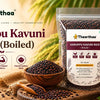
Our Karuppu Kavuni Rice Boiled is unpolished and parboiled, ready for everyday meals and traditional sweets.
View Karuppu Kavuni RiceHow to cook Karuppu Kavuni Rice
Basic cooked rice (pressure cooker)
- Rinse 1 cup of Karuppu Kavuni rice 2–3 times. The water will look purple, which is normal.
- Soak for 6–8 hours or overnight.
- Drain, then add 3 to 3.5 cups of fresh water and a pinch of salt.
- Pressure cook for 5–6 whistles on medium heat, then let the pressure release naturally.
- Leave it to rest for 10 minutes before serving.
Open-pot method
After soaking, boil 1 cup of rice in 5–6 cups of water for 40–50 minutes until tender, then drain off the extra water.
Soaking and water ratio at a glance
| Method | Soak | Water (per 1 cup rice) | Time |
|---|---|---|---|
| Pressure cooker | 6–8 hours | 3–3.5 cups | 5–6 whistles |
| Open pot | 6–8 hours | 5–6 cups (drain extra) | 40–50 minutes |
Chettinad Kavuni Arisi sweet
- Cook 1 cup of soaked Kavuni rice with 4 cups of water until very soft (7–8 whistles).
- Lightly mash it while warm.
- Stir in ¾ cup grated Karupatti (palm jaggery) or Nattu Sakkarai and cook for 3–4 minutes until it melts in.
- Add ½ cup freshly grated coconut, 2 tablespoons ghee and a pinch of cardamom powder.
- Serve warm or at room temperature.
Quick option: Kavuni flakes
For a faster breakfast, Kavuni Poha / Flakes need only a 2–3 minute rinse and soak before tempering, like regular poha. See our guide to traditional rice and millet flakes for more ideas.
Storage
Store uncooked rice in an airtight container in a cool, dry place away from sunlight. Refrigerate cooked rice within 2 hours and use it within a day.
Frequently asked questions
What is Karuppu Kavuni rice called in English?
It is called black rice in English. In Tamil it is Karuppu Kavuni or Kavuni Arisi.
Do you need to soak Karuppu Kavuni rice before cooking?
Yes. Soaking it for 6–8 hours softens the bran layer, cuts the cooking time and gives a more even texture.
Why does black rice turn purple when cooked?
The anthocyanin pigments in the bran dissolve slightly in water. That turns both the cooking water and the grain a deep purple.
Can Karuppu Kavuni be eaten every day?
It can be cooked like any other rice as part of regular meals. Many families rotate it with other traditional varieties for variety in taste and texture.
What is Kavuni Arisi sweet made of?
The Chettinad version uses cooked Kavuni rice, palm jaggery or country sugar, grated coconut, ghee and cardamom.
What is the difference between Kavuni rice and Kavuni poha?
Kavuni rice is the whole grain and needs a long soak and cook. Kavuni poha is the same rice flattened into flakes, which cooks in minutes.
Shop the ingredients
The information in this article is for educational purposes only and is not a substitute for professional medical advice. Consult your doctor before making dietary changes.
- Posted in:
- Black Rice
- Chettinad Recipes
- How to Cook Rice
- Karuppu Kavuni
- Kavuni Arisi
- Tamil Rice Varieties
- Traditional Rice